

A background check for caregivers carries a different weight than almost any other pre-employment screen, because the person you’re vetting may end up alone in someone’s home, with full access to an aging parent, a child, or an adult with a disability, and no one else in the room to notice if something goes wrong. That’s not meant to alarm anyone considering a career in caregiving; the vast majority of caregivers are exactly who they say they are. It’s meant to explain why agencies, home care companies, and families across the country treat this particular screen with more scrutiny than a typical hire.
Caregiver hiring in the USA has grown sharply over the past decade as the population ages and more families choose in-home care over facility placement, and that growth has brought more attention to how thoroughly agencies vet the people they place. A background check for caregivers that only looks at a single state criminal database, the way a lot of standard pre-employment screens do, misses the registries, the multi-state history, and the certification checks that actually matter for this kind of work.
This guide walks through exactly what to consider in a background check for caregivers, the registries and verifications that go beyond a standard criminal search, how compliance works differently for vulnerable population hiring, and what Employers Choice Screening builds into caregiver hiring in the USA for the agencies and care providers we work with.
Why a Background Check for Caregivers Is Different From a Standard Hire
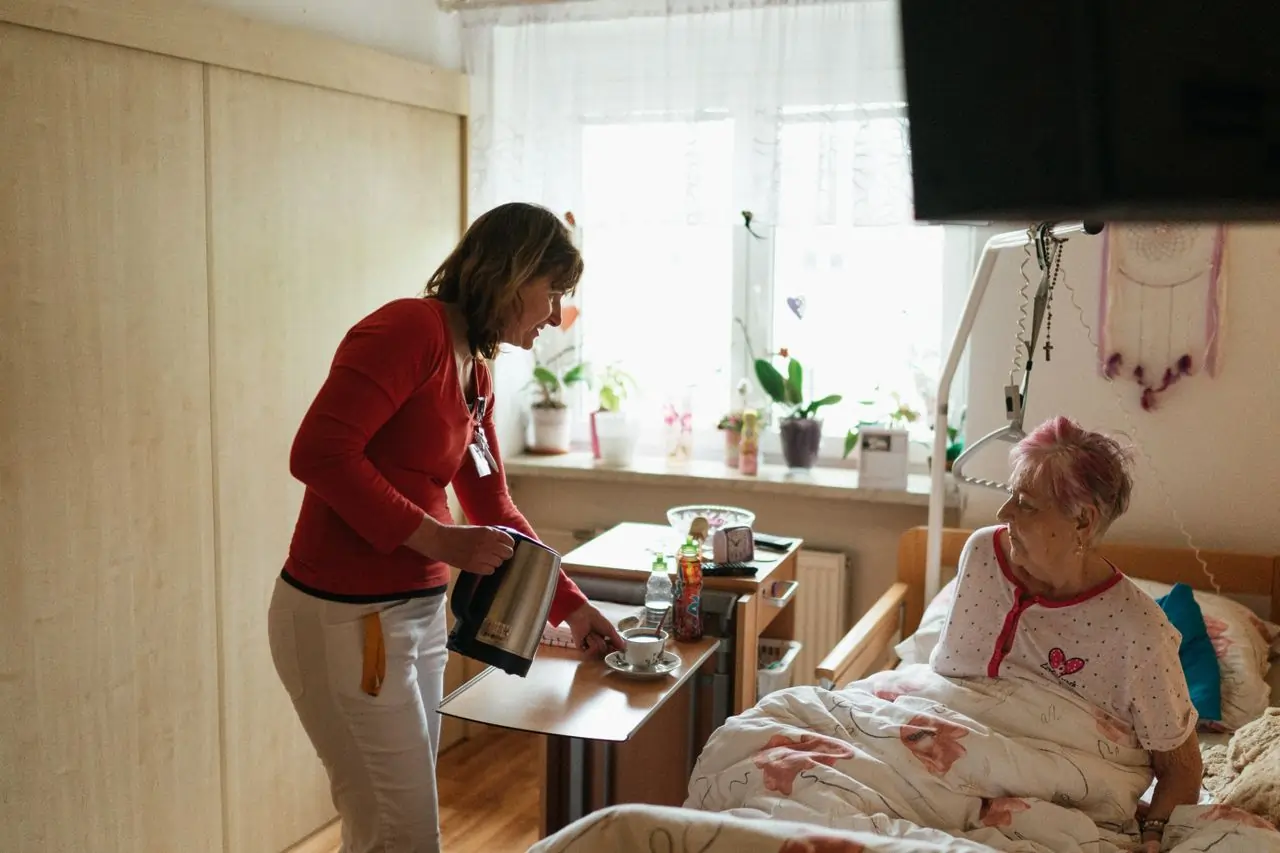
Most pre-employment screening exists to protect an employer from risk: theft, workplace violence, and a bad hire who can’t do the job. A background check for caregivers protects all of that, too, but it also protects someone who often can’t advocate for themselves. An elderly client with dementia, a child with a disability, and an adult recovering from surgery are none of them in a position to report a problem the way a coworker in an office might.
That changes what the screen has to cover. A caregiver typically works alone in a private home, sometimes overnight, often with access to medications, financial documents, and the client’s daily routine. No supervisor is walking past every hour. Federal law recognised this gap years ago: Section 6201 of the Affordable Care Act established the National Background Check Program specifically for long-term care workers with direct access to patients and residents, requiring fingerprint-based state and FBI checks plus searches of state abuse and neglect registries, not just a standard name-based criminal search.
Caregiver hiring in the USA also tends to involve a more mobile workforce than most industries. Caregivers move between states for family reasons or better pay more often than the average worker, which means a background check for caregivers needs to look at criminal history and abuse registries in every state a candidate has lived, not just the one where they’re applying. A clean record in the state where someone currently lives means very little if they have a disqualifying history three states away that a single-state search would never surface.
This is also an area where the stakes for the employer are higher than usual. A care agency that places someone with a documented history of elder abuse, even unknowingly, is looking at liability exposure that goes well beyond a typical negligent hiring claim, plus the kind of reputational damage that’s difficult to recover from in a tightly networked local care community.
Caregiver hiring in the USA has also shifted toward independent placement platforms and gig-style caregiver marketplaces over the past several years, where a family might book a caregiver through an app with far less vetting than a licensed home care agency would apply.
That shift makes a thorough background check for caregivers even more important for the agencies that do operate within state licensing requirements, since families increasingly compare the safety of an agency placement against the convenience of an unvetted gig platform, and the agencies that can demonstrate the depth of their screening process have a real advantage in that comparison.

What to Consider in a Background Check for Caregivers
So what should actually be in a background check for caregivers, beyond the basic criminal search every screening provider offers? After working with home care agencies, senior living operators, and private care placement firms, the same seven elements come up again and again as the difference between a screen that checks a box and one that actually protects the people being cared for. Here’s what to consider in a background check for caregivers, in the order most agencies prioritise it.
1. Multi-State and County-Level Criminal History
A national criminal database search is a useful first pass, but it’s not a substitute for county-level verification, and it was never designed to be one. National databases are aggregated from thousands of individual county and state sources, and gaps in reporting are common, particularly for older records or smaller jurisdictions.
A thorough background check for caregivers pulls criminal records at the county level for every jurisdiction the candidate has lived in over the past seven to ten years, not just their current address. Given how often caregivers relocate for work, this single step catches more disqualifying history than any other part of the screen. Pair that with a search of the sex offender registry in every state the candidate has resided in, since that’s a non-negotiable check for anyone working with vulnerable people in a private home.
2. State Abuse, Neglect, and Exclusion Registries
This is the piece a lot of standard screening packages leave out entirely, and it’s arguably the most important one for this role specifically. Every state maintains some form of abuse and neglect registry, and many also maintain an exclusion list barring individuals from working in healthcare or care settings due to substantiated findings of abuse, neglect, or financial exploitation.
A background check for caregivers should include a search of these registries in every state the candidate has lived or worked, plus a check of the federal OIG List of Excluded Individuals and Entities, which bars people from any role involved in federally funded healthcare programs. None of this shows up on a standard criminal background check, which is exactly why so many home care agencies layer it on as a separate, required step rather than treating it as optional.
3. Employment History and Caregiving-Specific References
Anyone can list a caregiver or home health aide on a resume. Verifying that the candidate actually held those roles, for the length of time claimed, and left on reasonable terms, is a step a lot of employers skip simply because phone verification takes time.
For caregiving specifically, it’s worth going further than a standard employment check. Speaking with a previous supervisor or care coordinator, not just an HR department, confirming dates of employment, often surfaces information about reliability, punctuality, and how the candidate handled difficult situations with clients, the kind of detail that matters enormously in a one-on-one caregiving relationship but never shows up in a basic background check for caregivers that stops at confirming job titles and dates.
4. License and Certification Verification
If the role requires a Certified Nursing Assistant license, a Home Health Aide certification, or a current CPR card, verify it directly with the issuing state board rather than accepting a copy of the certificate at face value. Licenses lapse, get suspended, or, in some cases, get revoked following disciplinary action, and none of that shows up unless someone actually checks the primary source.
This step matters more than it might seem, because a caregiver working with an expired or revoked certification isn’t just a compliance gap; it’s a liability problem if something goes wrong during care and the agency’s documentation can’t show the person was properly credentialed at the time. A background check for caregivers that includes license verification closes that gap before the candidate’s first shift, not after an incident forces a review.
5. Driving Record, Where Applicable
A lot of caregiving roles involve transporting clients to medical appointments, errands, or social activities, which makes a motor vehicle record check essential whenever driving is part of the job description. A clean criminal record doesn’t tell you anything about someone’s driving history, and a pattern of DUIs, license suspensions, or reckless driving citations is exactly the kind of thing that needs to factor into the hiring decision before that person gets behind the wheel with a client in the car.
This check is easy to skip because it feels separate from a standard background check for caregivers, but for any role involving transportation, treating it as optional creates a liability gap that’s entirely avoidable with one additional search.
6. Drug Testing Protocols
Caregivers often have access to a client’s prescription medications, sometimes administering them directly, which makes drug testing a reasonable and increasingly common part of the hiring process. The protocol should be clear about what’s being tested for and how a positive result is handled, particularly in states where marijuana laws now restrict how a positive THC result can factor into an employment decision.
A consistent drug testing policy, applied the same way to every candidate for the same role, also protects the agency from claims of inconsistent or discriminatory treatment, which is a real risk if drug testing decisions are made case by case without a documented standard. A background check for caregivers that includes a clear drug testing protocol, rather than treating it as a vague afterthought, gives both the agency and the candidate clarity from day one.
7. Ongoing or Continuous Monitoring
A background check for caregivers run once at hire only tells you about the candidate’s history up to that point. Caregiving relationships often last months or years, and a clean record at hire doesn’t guarantee a clean record two years into the placement.
Many agencies now build in periodic rescreening, sometimes annually, sometimes through continuous criminal monitoring services that flag new arrests or convictions as they’re entered into court records, rather than waiting for a scheduled rescreen to catch something. For a role with this much ongoing access and this little supervision, continuous monitoring closes a gap that a one-time screen, no matter how thorough, simply can’t cover on its own.
Caregiver Hiring in the USA: Why Compliance Can’t Be an Afterthought
Compliance for a background check for caregivers operates on two tracks at once, and a lot of agencies only know about one of them.
The first track is the Fair Credit Reporting Act, which applies the same way it does to any other employer: clear written disclosure, signed authorization, a pre-adverse action notice if you’re considering not hiring someone based on the report, a reasonable waiting period, and a final adverse action notice if you proceed. Skip any of these steps, and you’re exposed to a private lawsuit regardless of how good your reasons for the hiring decision were.
The second track is specific to vulnerable population hiring, and it works differently than general EEOC guidance might suggest. Federal nondiscrimination law generally requires an individualized assessment before excluding someone based on a criminal record, looking at the nature of the offense, how much time has passed, and the role’s duties. But many states have separate, specific laws for long-term care and home care settings that mandate automatic disqualification for certain offenses, things like abuse, neglect, or financial exploitation convictions, regardless of how long ago they occurred.
This isn’t a contradiction so much as a recognised exception: courts and regulators have generally accepted that protecting a genuinely vulnerable population justifies a stricter standard than applies to general hiring.
That means caregiver hiring in the USA often requires knowing both sets of rules and applying the right one depending on the state and the type of care setting involved, since a disqualifying offense list that’s mandatory in a licensed home care agency in one state might not carry the same automatic weight for a private family hiring a caregiver directly in a different state. A background check for caregivers built around this dual compliance structure protects the agency from both an FCRA claim and a state licensing violation at the same time.
How to Choose the Right Background Check for Caregiver Providers
Not every screening provider builds a program around this kind of work, and a few questions tend to separate the ones who have from the ones who are improvising.
Ask directly whether registry searches are included or billed separately. A background check for caregivers that doesn’t include state abuse and neglect registry checks, or treats them as a costly add-on, is missing the single most important difference between caregiver screening and standard employment screening.
Ask how the provider handles multi-state history. Given how often caregivers relocate, a provider that only searches the candidate’s current state of residence is leaving an obvious gap open. The right provider should automatically pull address history and search criminal records and registries in every state that history surfaces.
Confirm whether the provider can coordinate fingerprint-based checks where state law requires them, since some states mandate FBI fingerprint checks for long-term care and home care workers under the National Background Check Program framework, and not every screening company is set up to handle that process smoothly.
Ask about turnaround time for license and certification verification specifically, since this step often gets outsourced to a slower manual process, even when the rest of the screen is fast.
Pricing transparency matters here, too. A background check for caregivers that bundles registry searches, license verification, and multi-state criminal history into one clear price is easier to budget for than one that itemizes every registry as a separate line item, especially for agencies running consistent volume across multiple care settings.
Finally, confirm accreditation. A provider accredited by the Professional Background Screening Association has been independently audited against industry standards for accuracy and compliance, which matters when you’re the one accountable if a placement goes wrong. For caregiver hiring in the USA, where the population being protected can’t always advocate for themselves, the accreditation is worth more than a lower price per screen.
Why Employers Choice Screening Supports Caregiver Hiring in the USA
Employers Choice Screening is accredited by the Professional Background Screening Association, and our screening process, data handling, and compliance procedures are independently audited against the industry’s strictest standards.
We work with home care agencies, senior living communities, and private care placement firms across the country, which means our approach to caregiver hiring in the USA has been shaped by what actually goes wrong when a screening program falls short, not just by what looks good on paper.
We built our approach to caregiver hiring in the USA around the two gaps that cause the most problems for agencies: incomplete multi-state history and missing registry checks. Every background check for caregivers we run includes county-level criminal history across every state in the candidate’s address history, state abuse and neglect registry searches, and a federal OIG exclusion list check, layered on top of standard identity verification.
Our team also coordinates fingerprint-based checks where state law requires them for long-term care and home care employees, and we verify CNA, HHA, and other care-related certifications directly with the issuing state board rather than accepting documentation at face value.
For agencies managing caregiver hiring in the USA across multiple states, we keep disclosure language, registry coverage, and disqualifying offense criteria current as state laws change, so your compliance posture doesn’t depend on your internal team tracking fifty different sets of rules.
If your current screening provider treats caregiver placements the same as a standard office hire, it’s worth a conversation about what a background check for caregivers built specifically for vulnerable population care could catch that your current process doesn’t.
Get a Background Check for Caregivers Built for the Stakes Involved
Caregiving is one of the few jobs where someone with almost no oversight is trusted with the daily well-being of a person who can’t always speak up for themselves, and that’s exactly why a background check for caregivers has to go further than a standard pre-employment screen.
The agencies and care providers who get this right treat registry checks, multi-state history, and certification verification as standard, not optional, and they choose a screening partner who understands the compliance structure unique to vulnerable population hiring. That kind of depth is what responsible caregiver hiring in the USA actually requires, not an afterthought bolted onto a standard hiring process.
Employers Choice Screening has built its approach to caregiver hiring in the USA around exactly that combination of depth and compliance. If your current screening process stops at a single-state criminal search, it’s worth finding out what it’s missing.
FAQs
1. What does a background check for caregivers include?
A background check for caregivers typically includes criminal history, state abuse and neglect registry checks, the OIG exclusion list, employment verification, and license checks like CNA or HHA certification.
2. How much does a background check for caregivers cost?
Most caregiver background checks cost between $30 and $100, depending on how many states and registries are searched and whether drug testing is included.
3. Do caregivers need a background check by law?
Yes, in most states. Long-term care and home care workers with direct patient access are generally required to pass state and federal background checks before starting work.
4. What shows up on a caregiver background check?
Criminal convictions, sex offender registry status, state abuse or neglect registry listings, and OIG healthcare exclusions are the most common items that surface.
5. How long does a caregiver background check take?
Most results return within 24 to 72 hours, though fingerprint-based state and FBI checks can take several days longer.
6. Can a caregiver pass a background check with a criminal record?
It depends on the offense and the state. Minor or older offenses may not disqualify a candidate, but convictions for abuse, neglect, or violent crimes typically do.
7. Is a fingerprint background check required for caregivers?
In many states, yes, especially for long-term care and home care roles, under the federal National Background Check Program.
8. How often should caregivers be rescreened?
Many agencies rescreen caregivers annually or use continuous monitoring to catch new arrests or convictions between screening cycles.