
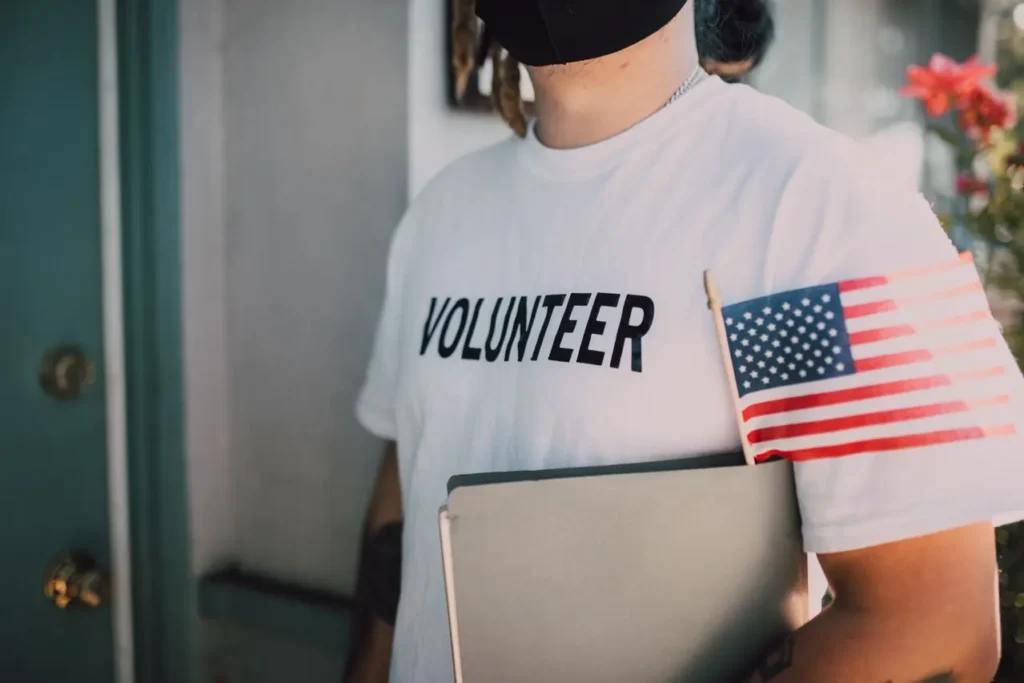
A background check for volunteers used to be something only the largest nonprofits bothered with, the kind of step a small food pantry or a weekend youth league assumed was reserved for organizations with a full HR department. That assumption has shifted fast. Volunteers now routinely work one-on-one with children, the elderly, and people with disabilities, often with less oversight than a paid employee would have, and the organizations that place them are increasingly expected to prove they vetted the person before handing over that access.
Volunteer screening has grown from an optional best practice into something funders, insurers, and state regulators actively ask about. A background check for volunteers that gets skipped because “they’re just helping out for a few hours” is exactly the gap that leads to the kind of incident a nonprofit never fully recovers from, reputationally or legally. None of this is about assuming the worst of people who give up their time. The overwhelming majority of volunteers have nothing to hide, and a transparent, consistently applied process tends to reassure good volunteers rather than discourage them.
This guide walks through how to run an effective background check for volunteers, step by step, the federal laws that specifically apply when nonprofits screen volunteers, and what to look for in a screening partner that actually understands how nonprofits operate, including how Employers Choice Screening approaches volunteer screening for the organizations we work with.
Why a Background Check for Volunteers Isn’t Optional Anymore
For years, a lot of nonprofits treated volunteers differently from paid staff, almost by default. Someone willing to give up their Saturday to coach a youth team or read to kids at the library felt like the last person you’d want to put through a formal vetting process, and plenty of organizations worried that asking would discourage people from showing up at all.
That instinct hasn’t aged well. The Federal Trade Commission clarified in 2011 that the Fair Credit Reporting Act’s protections around “employment purposes” extend to volunteers, meaning a background check for volunteers run through a third-party screening company has to follow the same consent, disclosure, and adverse action rules that apply to paid hires. Treating volunteer screening as a courtesy rather than a compliance requirement is no longer a defensible position.
The risk isn’t theoretical either. Volunteers frequently work in exactly the settings where unsupervised access to a vulnerable person creates the most exposure: youth sports, tutoring programs, hospice visits, and disaster relief shelters. A single bad placement, even a rare one, can trigger a negligent supervision claim, an insurance review, and the kind of local news coverage that makes future volunteer recruitment and fundraising significantly harder.
This has only become more pressing as volunteer programs have grown in scope. More nonprofits now run community-based programs that put volunteers directly inside someone’s home, whether that’s a meal delivery visit, a friendly visitor program for isolated seniors, or in-home tutoring, rather than supervised group activities at a central facility. A background check for volunteers designed for a supervised classroom setting doesn’t necessarily cover the risk profile of a volunteer who’s alone in someone’s living room for an hour, which is exactly why so many organizations have had to revisit a screening policy they hadn’t touched in years.
Insurance underwriters have caught up to this shift, too. A growing number of liability and directors and officers policies now ask nonprofits to document their screening practices for any role involving minors or vulnerable adults, and a documented background check for volunteers process can be the difference between a smooth renewal and a coverage gap if a claim is ever filed.
Screening volunteers also protects the volunteers themselves. A consistent, well-documented background check for volunteers process means everyone is evaluated the same way, which protects long-time volunteers from feeling singled out and protects the organization from claims that screening was applied unevenly or unfairly to certain individuals.

How to Run an Effective Background Check for Volunteers: Step-by-Step
Running a background check for volunteers well isn’t complicated, but it does require a deliberate process rather than an ad hoc one. Here’s the sequence that holds up across nonprofits of almost any size.
1. Decide Which Roles Actually Need Screening
Not every volunteer role carries the same risk, and a tiered approach keeps your program manageable without leaving real gaps. A one-time event volunteer handing out water at a 5K doesn’t need the same depth of background check for volunteers as someone driving children to and from a weekly program unsupervised. Map your roles by level of access to vulnerable populations, financial systems, or unsupervised contact, then set a screening depth for each tier before you start recruiting.
A simple three-tier model works for most organizations: light-touch identity verification for short, supervised, public-facing roles; a full criminal history and registry check for anything involving regular contact with children, the elderly, or people with disabilities; and the deepest tier, including fingerprint-based checks where your organization qualifies, for roles with unsupervised, one-on-one access.
Writing this tiering down as an actual policy, rather than deciding case by case, makes your background check for volunteers process far easier to defend if it’s ever questioned. Revisiting that policy once a year, as programs and roles evolve, keeps it realistic rather than something written once and forgotten.
2. Get Proper Written Consent and Disclosure
Because the FTC treats volunteer screening like employment screening for FCRA purposes, you need a standalone written disclosure and signed authorization before running any check, separate from your general volunteer application. Skipping this step, even with a volunteer who’s eager to get started, is the single most common compliance mistake organizations make with a background check for volunteers.
3. Run Multi-State Criminal History, Not Just a Database Search
There’s no single national criminal database that captures every county and state record, so a background check for volunteers that relies only on an instant database search is going to miss things. Pull address history for the past seven to ten years and search criminal records in every state the candidate has lived, not just their current one.
This matters more for volunteers than people sometimes assume, since volunteer pools often include retirees, students, and people who relocate for family reasons more frequently than the average paid workforce. A candidate who lived in three different states over the past decade needs criminal history pulled from all three, and a background check for volunteers that stops at a single statewide search can clear someone who has a disqualifying record sitting in a county database two states away.
4. Check the National Sex Offender Registry
This should be standard for every volunteer role involving any contact with children or vulnerable adults, regardless of how minor the role seems. It’s also one of the few checks available as a free public resource, which makes it an easy baseline even for organizations running a budget-conscious background check for volunteers.
5. Use NCPA and VCA Fingerprint Checks Where Your Organization Qualifies
The National Child Protection Act and the Volunteers for Children Act allow qualified entities, organizations serving children, the elderly, or people with disabilities, to request fingerprint-based national criminal history checks directly through the FBI. If your nonprofit qualifies, this gives you access to records that a standard commercial background check for volunteers simply can’t reach, often at a lower per-check fee than a typical employee fingerprint search.
As of the most recent federal fee schedule, FBI fingerprint processing for volunteers under these programs runs lower than the fee charged for employees, which is one of the few places where screening a volunteer can actually cost less than screening a paid hire for the same role.
6. Verify References With Someone Who Actually Supervised the Volunteer
A reference check for a volunteer role is often treated as a formality, but a quick call to a previous volunteer coordinator or supervisor, not just a personal friend listed as a reference, can surface reliability and conduct issues that never show up on a criminal record. This step rounds out a background check for volunteers that would otherwise rely entirely on records and registries.
7. Follow the Adverse Action Process if You Decline a Volunteer
If something in the report leads you to decline a volunteer, the FCRA’s adverse action process applies just as it would for a paid hire: a pre-adverse action notice, a reasonable waiting period, and a final adverse action notice if you proceed. Organizations that skip this step because “it’s just a volunteer position” are taking on real legal exposure for very little practical benefit.
8. Document and Retain Your Screening Records
A background check for volunteers is only as defensible as the paperwork behind it. Keep signed disclosure and authorization forms, a record of which tier each role was screened at, and documentation of any individualized assessment performed before a decision was made, for as long as your state’s record retention requirements specify. If a placement is ever questioned years later, being able to show exactly what was checked and when is often what separates a defensible program from a costly one.

Volunteer Screening Laws Every Nonprofit Should Know
A background check for volunteers sits at the intersection of a few different legal frameworks, and most compliance problems come from organizations only knowing about one of them.
The Fair Credit Reporting Act is the foundation. It governs any check run through a third-party consumer reporting agency, and since the FTC’s 2011 guidance, that includes volunteer screening conducted the same way employment screening is conducted, with the same disclosure, consent, and adverse action requirements.
The National Child Protection Act of 1993 and the Volunteers for Children Act of 1998 sit on top of that. These federal statutes were specifically written to give qualified entities, organizations that serve children, the elderly, or people with disabilities, access to FBI fingerprint-based national criminal history checks for volunteers and employees, something that wasn’t otherwise available outside of certain licensed industries.
The Child Protection Improvements Act, passed in 2018, expanded this further by creating a federal program for states that hadn’t set up their own procedures under the earlier laws, so more nonprofits now have a path to nationwide fingerprint checks than a decade ago.
That gap mattered more than it might sound. Many states had never passed the implementing legislation required under the original 1993 and 1998 laws, which left qualified entities in those states without a practical path to FBI fingerprint checks at all, regardless of how clearly their volunteers fit the categories the federal laws were meant to protect. The newer federal program gives those organizations an alternative route rather than leaving them stuck waiting on state legislatures to act.
State law adds another layer on top of the federal framework. Some states have their own statutes governing background checks for specific categories of youth-serving or elder care volunteer organizations, sometimes with mandatory disqualifying offense lists similar to what applies in licensed long-term care settings. A background check for volunteers that only follows federal rules without checking the relevant state requirements can still leave an organization out of compliance.
Record retention requirements also vary by state, and they’re easy to overlook in a volunteer program where paperwork tends to be less formal than employee files. Some states specify how long signed disclosure forms and screening results must be kept on file, particularly for organizations serving children, and a background check for volunteers program without a clear retention policy can leave an organization unable to prove compliance if a placement is ever scrutinized after the fact.
EEOC guidance technically applies to volunteers in some contexts too, generally requiring an individualized assessment before excluding someone based on a criminal record rather than a blanket disqualification policy, except where a more specific child or elder protection statute mandates automatic exclusion for certain offenses.
How to Choose the Right Background Check for a Volunteer Provider
Most background screening companies are built around corporate hiring volume and pricing, which doesn’t always translate well to how nonprofits actually operate.
Start with the pricing structure. Nonprofits often screen volunteers in batches around a seasonal program launch, then go quiet for months, so a provider with nonprofit-specific volunteer pricing is going to cost less over a year than one billing every volunteer screen at standard employee rates.
Ask whether the provider can support NCPA and VCA fingerprint-based checks if your organization qualifies as a covered entity. Not every screening company is set up to coordinate that process, and the ones that are tend to make it considerably easier to access than going through a state agency on your own.
Confirm the provider’s multi-state search depth. Given how often volunteer pools include people who’ve lived in several states, a background check for volunteers that only searches one state’s records is leaving an obvious gap that a more thorough provider would catch.
Look for batch ordering support for seasonal volunteer drives, since processing forty new volunteers ahead of a summer camp season, one at a time, wastes staff time that a smaller nonprofit usually can’t spare.
It also helps to ask whether the provider has experience with your type of organization. A background check for volunteers built primarily for corporate clients sometimes misses sector-specific nuance, like how faith-based organizations, youth sports leagues, and disaster relief groups each tend to structure volunteer roles differently, recruit on different timelines, and face different state licensing questions depending on whether children are involved.
Finally, confirm the provider understands FCRA’s adverse action requirements specifically as they apply to volunteers, not just employees, since a generic compliance workflow built for corporate hiring sometimes misses volunteer-specific nuances like unpaid status or informal application processes.

Why Employers Choice Screening Supports Volunteer Screening for Nonprofits
Employers Choice Screening is accredited by the Professional Background Screening Association, and our compliance procedures are independently audited against the industry’s strictest standards.
We built our approach to volunteer screening around what nonprofits actually need: clear, nonprofit-friendly pricing, multi-state criminal history as standard rather than an upsell, and support coordinating NCPA and VCA fingerprint-based checks for organizations that qualify. Every background check for volunteers we run includes county-level criminal history across the candidate’s full address history and a national sex offender registry search by default.
Our team also helps organizations build a tiered screening policy, so a one-time event volunteer and a long-term youth program volunteer aren’t screened to the same depth or expense, which keeps a volunteer screening program sustainable for nonprofits operating on tight budgets.
For volunteers who stay involved year after year, we also support periodic rescreening rather than treating a background check for volunteers as a one-time event at intake. A clean record at the start of a three-year volunteer relationship doesn’t guarantee a clean record three years later, and a rescreening schedule closes that gap without requiring your staff to manually track renewal dates for every volunteer on a spreadsheet.
If your current screening process treats every volunteer the same way, regardless of role, or skips the FCRA disclosure and consent steps because “it’s just a volunteer,” it’s worth a conversation about what a background check for volunteers built specifically for nonprofit compliance could look like instead.
Run a Background Check for Volunteers That Actually Protects Your Mission
Volunteers are often the most visible face of a nonprofit’s mission, and that’s exactly why a background check for volunteers deserves the same seriousness as screening for any paid role, not less. The organizations that get this right build a tiered, well-documented process, understand which federal laws specifically apply to volunteer screening, and choose a partner who can coordinate fingerprint-based checks when the organization qualifies for them.
Employers Choice Screening has built its approach to volunteer screening around exactly that combination of compliance and nonprofit-friendly pricing. If your current process treats every volunteer the same way or skips required disclosure steps, it’s worth finding out what it’s missing before your next recruiting drive. That’s the kind of partnership that lets your team spend its time on the mission instead of chasing down compliance paperwork.
FAQs
1. What is a background check for volunteers?
A background check for volunteers is a screening process, usually including criminal history and registry checks, used to verify that someone is safe to work with the people an organization serves.
2. How much does a background check for volunteers cost?
Most volunteer background checks cost between $15 and $50, often lower than employee screening due to nonprofit-specific pricing and reduced federal fingerprint fees.
3. Are nonprofits legally required to background check volunteers?
Not universally, but many states require it for roles involving children or vulnerable adults, and federal law treats volunteer screening like employment screening once a third party is involved.
4. What shows up on a volunteer background check?
Criminal convictions, sex offender registry status, and, in some states, child or elder abuse registry listings are the most common results that surface.
5. How long does a background check for volunteers take?
Standard checks typically return within 24 to 48 hours, while fingerprint-based FBI checks under NCPA or VCA can take several business days.
6. Can a volunteer be rejected for a criminal record?
Yes, but the FCRA’s adverse action process still applies, and the decision should generally be based on the offense’s relevance to the specific volunteer role.
7. Does FCRA apply to volunteer background checks?
Yes. The FTC has stated that FCRA’s employment purpose provisions apply to volunteers whenever a third-party screening company conducts the check.
8. Do all volunteers need a fingerprint background check?
No. Fingerprint checks are typically reserved for higher-risk roles involving unsupervised contact with children or vulnerable adults, not every volunteer position.