
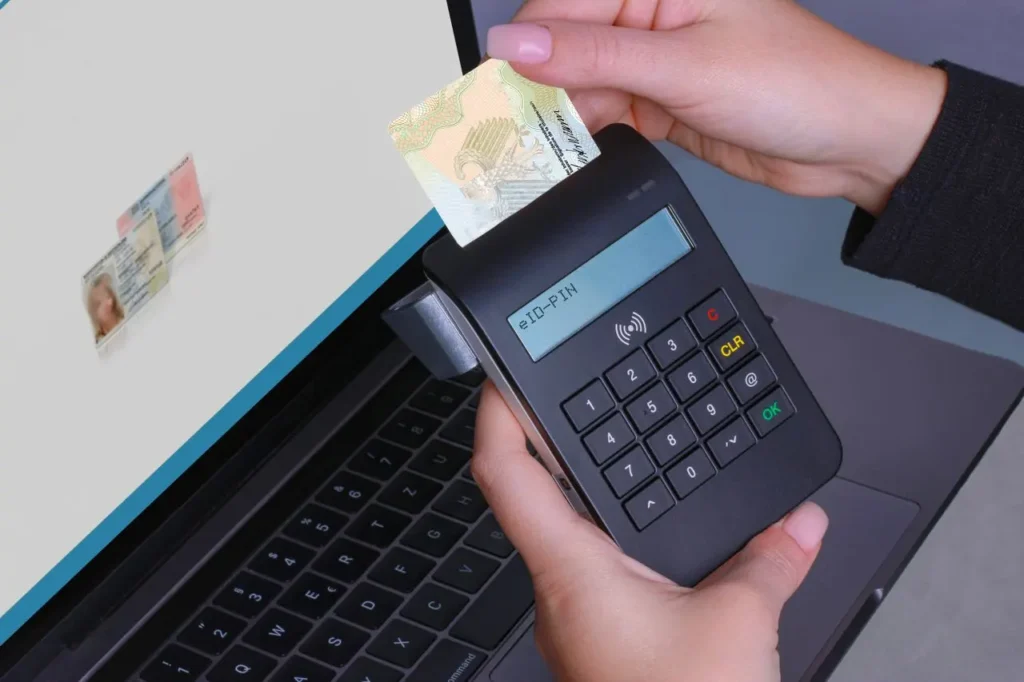
Employment identity fraud is no longer a rare headache buried in a compliance manual somewhere. It is showing up in real interview rooms, on real video calls, and inside real applicant tracking systems, all across the United States. If you run hiring for a company of any size, you have probably already brushed up against it without realizing what you were looking at: a candidate whose Social Security number does not quite match.
This reference sounds a little too rehearsed, or like a “new employee” whose face on the onboarding call looks slightly different from the one in the interview. This kind of fraud thrives in the gap between what a resume claims and what is actually true, and it is costing American employers far more than most HR budgets ever account for.
At Employers Choice Screening, we sit inside this problem every single day. As a PBSA-accredited background screening company, we watch employers discover, sometimes too late, that the person they hired was not the person who applied. This article breaks down what employment identity fraud actually looks like in 2026, why candidate fraud is climbing so fast, the seven hidden costs employers rarely see coming, and the practical verification steps that stop it before it reaches your payroll.
What Is Employment Identity Fraud, Exactly?
Employment identity fraud happens whenever someone misrepresents who they are, what they have done, or what credentials they hold to get hired, keep a job, or gain access to a workplace they should not have access to. It is broader than a simple resume exaggeration. It can involve a stolen Social Security number used on an I-9 form, a borrowed diploma, a fabricated employment history, or, increasingly, an AI-generated face sitting in front of a webcam during a video interview.
Candidate fraud is the umbrella term recruiters and screening professionals use for the wider pattern: lying about degrees, inflating job titles, hiding a termination, or using someone else’s identity entirely. Employment identity fraud is at the most serious end of that spectrum because it does not just misrepresent a skill set; it misrepresents an actual human being. And once a fraudulent identity is sitting inside your payroll system, with access to your network, your customer data, or your building, the fallout is rarely contained to a single bad hire.
Why Employment Identity Fraud Is Exploding Right Now
A few years ago, employment identity fraud mostly meant a stolen SSN used to dodge a criminal record or immigration restriction. That still happens constantly. But the landscape has shifted, and shifted fast, thanks to remote work, AI tools, and a wave of organized fraud rings that treat hiring pipelines like a business opportunity. According to the Federal Trade Commission, employment identity theft, where a stolen Social Security number is used to obtain a job, generated more than 37,500 reports in a single recent year, a jump of roughly 20% from the year before.
At the same time, the Better Business Bureau’s Scam Tracker recorded employment scam reports nearly doubling year over year, with reported losses to job and employment scams climbing from around $90 million in 2020 to more than $500 million by 2024. Those numbers describe candidates and consumers being victimized, but the flip side of that coin is an employer sitting on the other end of the interview table, unknowingly onboarding the fraud.
Stolen Social Security Numbers and Synthetic Identities
The oldest form of employment identity fraud still works because it is quiet. A stolen or purchased Social Security number gets paired with a fabricated work history, and the candidate simply applies like anyone else. Synthetic identities, built by blending a real SSN (often belonging to a child or someone with no credit history) with fake personal details, are particularly hard to catch with a surface-level check. This is exactly why an SSN trace and address history validation matter so much before day one.
Deepfake Interviews and AI-Generated Candidates
The newer, more unsettling version of employment identity fraud involves deepfake technology during the video interview itself. The FBI issued a public service announcement warning employers that fraudulent candidates are using deepfake video and voice-spoofing tools to disguise their real identities during remote interviews, largely targeting technology and IT roles where sensitive systems access is the real prize.
Security researchers have shown that a convincing deepfake application can be built in about seventy minutes. Gartner has gone as far as predicting that by 2028, one in four job candidate profiles globally will be fake in some way. That is not a distant, theoretical risk. That is a hiring problem employers are dealing with this quarter.

The 7 Hidden Costs of Employment Identity Fraud for Employers
Most companies think about employment identity fraud in terms of the obvious headline risk: “we hired a criminal” or “we hired someone with fake credentials.” Those are real concerns. But the more serious, more expensive damage tends to hide in places nobody budgets for.
1. Direct Financial Loss
When employment identity fraud slips through, the financial hit rarely stops at a single paycheck. Fraudulent hires have been linked to payroll diversion, expense reimbursement scams, and in more serious cases, direct theft of company funds or client assets. SHRM data shows the average cost of a single bad hire already sits around $17,000 in direct costs alone, before you factor in the added legal and security cleanup that comes with a fraud-driven termination.
2. Compliance and Legal Exposure
Employers have legal obligations under the Fair Credit Reporting Act (FCRA), I-9 employment eligibility rules, and, depending on the role, industry-specific licensing requirements. When this kind of fraud is discovered after the fact, it can trigger audits, fines, and, in some cases, liability for negligent hiring, particularly if the fraudulent employee caused harm to a customer, coworker, or third party while employed under a false identity.
3. Data Security Breaches
This is the cost that keeps CISOs up at night. This remote-first fraud, especially the deepfake interview variety, is frequently tied to attempts to gain insider access to company networks, source code, or customer databases. The FBI’s warning specifically calls out this motive: fraudulent remote hires aren’t always after a paycheck; sometimes the paycheck is just the cover story for data theft.
4. Reputational Damage
Clients, partners, and job candidates all talk. When word gets out that a company was fooled by a fraudulent hire, especially one connected to a breach or a public incident, it damages trust with customers and future applicants alike. Reputational cost is hard to put a dollar figure on, but it shows up in fewer qualified applicants, lost client confidence, and increased scrutiny from vendors and regulators.
5. Wasted Hiring Investment
Every dollar spent sourcing, interviewing, and onboarding a fraudulent candidate is a dollar that produced nothing. Recruiter hours, hiring manager time, training costs, and equipment (especially for remote roles where laptops and credentials are shipped out before day one) are all sunk the moment the fraud is uncovered. Then the whole cycle starts over, on a delayed timeline, for a role that still needs to be filled.
6. Insider Threats from Fraudulent Remote Hires
Once someone using a false identity is inside your systems, the threat does not stay static. Access can be sold, shared, or used to plant backdoors well after onboarding. Several publicized cases involving fraudulent remote IT workers have shown how a single successful case of candidate fraud can escalate into a sustained insider threat that persists for months before anyone notices.
7. Erosion of Team Trust and Morale
This cost rarely makes the spreadsheet, but ask any manager who has had to explain to a team why a colleague was suddenly “let go” under mysterious circumstances. This kind of fraud damages internal trust, slows down collaboration, and can make hiring managers overly cautious in ways that hurt future hiring speed and candidate experience.
How Candidate Fraud Slips Past Traditional Hiring Screens
Here is the uncomfortable truth: a lot of standard hiring processes were never built to catch employment identity fraud. Interviews reward confidence, not honesty. Resumes are self-reported. And even when companies run background checks, many only check criminal records, without verifying employment history, education, or the candidate’s actual identity against government-grade data sources.
SHRM reporting on industry survey data found that 85% of employers who ran background checks uncovered a lie or misrepresentation on a resume or application, up sharply from 66% just five years earlier. Yet only about 49% of employers actually verify education credentials, leaving a wide-open lane for candidate fraud involving fabricated degrees. The gap between “we ran a background check” and “we verified this person is who they say they are” is exactly where employment identity fraud lives.
Add remote hiring into the mix, where a candidate may never set foot in an office before their first day, and the opportunity for this kind of fraud multiplies. No in-person ID check. No face-to-face reference conversation. Just a video call, a resume, and a hiring manager under pressure to fill a seat quickly.

Real Warning Signs of Employment Identity Fraud During Hiring
You do not need to be a forensic investigator to catch most cases of employment identity fraud early. A few patterns show up again and again:
Inconsistent details between the resume, the application, and verbal answers during the interview. Employment dates that shift slightly each time they are mentioned, or job titles that get “upgraded” between the resume and the reference conversation, are classic signs of candidate fraud.
Video and audio that do not quite sync. The FBI’s advisory specifically flagged lip-sync mismatches, unnatural pauses before answering unexpected questions, and coughs or background noises that don’t match what’s visible on screen, all signs of deepfake-driven employment identity fraud.
A reluctance to complete standard verification steps. A legitimate candidate rarely balks at an SSN trace, an I-9 check, or a request to verify a previous employer. Pushback, delays, or “my old company can’t be reached” excuses deserve a second look.
Shipping requests that do not match the candidate’s stated location or identification. This has become a common thread in remote-hire fraud cases like this one, where equipment gets rerouted to an address that has nothing to do with the person who interviewed.
Reference contacts that feel scripted or that share oddly similar phrasing to the candidate’s own resume language. Fraud rings sometimes coach references or use conspirators posing as former managers.
How to Stop Employment Identity Fraud Before It Costs You
The good news: employment identity fraud is preventable, or at least catchable early, when you build verification into your hiring process instead of treating it as an afterthought. This is the exact work our verification services team handles for employers across the country every day.
A strong defense against this kind of fraud usually includes several layers working together, not just one checkbox:
Identity verification. Confirming a candidate’s Social Security number, address history, and personal details actually belong to the person applying is the foundation. Our identity verification and SSN trace services catch mismatches before an offer letter ever goes out.
I-9 and E-Verify compliance. Federal I-9 and E-Verify employment eligibility verification confirm a candidate is legally authorized to work under the identity they’ve presented, closing one of the most common doors for employment identity fraud.
Employment history verification. Confirming previous job titles, dates, and responsibilities directly with past employers shuts down a huge share of candidate fraud attempts, since fabricated work histories rarely hold up to a direct call.
Education verification. With roughly a third of applicants misrepresenting academic credentials in some way, verifying degrees directly with the issuing institution closes a gap that far too many employers still leave open.
Reference checks. A structured reference check that goes beyond a form email adds a human layer of verification that’s genuinely difficult for candidate fraud to fake convincingly.
Consent-Based Social Security Verification (CBSV). For roles where identity assurance really matters, CBSV confirms an SSN, name, and date of birth combination directly against Social Security Administration records, one of the strongest tools available against employment identity fraud.
Social media and adverse media search. Cross-referencing a candidate’s digital footprint can surface inconsistencies that traditional checks miss entirely, adding another layer of confidence before you extend an offer.
Layering these checks together does more than catch a single liar on a resume. It builds a verification process that makes this kind of fraud dramatically harder to pull off in the first place, which is exactly the point.

Finding a Background Check Company Near You That Can Actually Catch Candidate Fraud
If you’ve searched for a “background check company near me” or an “employee screening service near me,” you already know the market is crowded. The challenge is that not every provider is built to catch this modern threat, especially the AI-driven and deepfake variety that’s emerged over the past couple of years. A lot of vendors still run a basic criminal search and call it a day.
What actually matters, wherever you’re located across the United States, is working with a background screening company that combines identity verification, employment and education verification, and compliance expertise under one roof, backed by FCRA-compliant processes and fast turnaround. Employers Choice Screening serves clients nationwide, from small businesses in your local market to large multi-state enterprises, with the same PBSA-accredited standard of care applied to every single report, no matter where your hiring team or your candidates are located.
That accreditation isn’t just a badge, either. It means our processes are held to the PBSA’s official accreditation standards for accuracy, compliance, and data security, so you’re not just hiring a vendor; you’re hiring a partner who’s been vetted the same way you should be vetting your candidates.
Why Employers Choice Screening Is Built to Stop Employment Identity Fraud
We’ve spent nearly 25 years focused on one job: helping employers hire the person they actually think they’re hiring. As a Professional Background Screening Association-accredited firm, Employers Choice Screening invests heavily in compliance, quality assurance, information security, and customer service because catching this kind of fraud requires all four working together, not just one.
Our Smart Screening Portal gives your HR team visibility into every step of the verification process; our dedicated account managers understand the specific candidate fraud risks in your industry, and our turnaround times (typically 24 to 48 hours) mean thorough verification doesn’t have to slow down your hiring pipeline. Whether you need a straightforward employment verification or a full-layered defense against hiring fraud, including SSN trace, CBSV, I-9/E-Verify, education verification, and reference checks, our team builds a screening package around your actual risk, not a generic template.
Summary
Employment identity fraud isn’t a rare edge case anymore. It’s a growing, well-documented risk that’s already cost American employers hundreds of millions of dollars, and it’s evolving faster than most internal HR processes can keep up with on their own. The seven hidden costs covered here rarely show up on the same line item, which is exactly why so many companies underestimate the real price of candidate fraud until it’s already happened to them.
Employers Choice Screening is PBSA-accredited, and our verification services layer identity verification, SSN trace, I-9/E-Verify compliance, employment and education verification, and CBSV into a single screening process built to catch this kind of fraud before it reaches your payroll.
If your current screening process stops at a criminal search and calls it done, reach out to Employers Choice Screening for a free quote and see what a layered verification process built to catch candidate fraud can add to your next hire.
What is employment identity fraud?
It happens when someone uses a false, stolen, or manipulated identity to apply for, obtain, or keep a job. This can involve a stolen Social Security number, a fabricated work history, a borrowed diploma, or, increasingly, deepfake video technology used to disguise a candidate’s real identity during a remote interview.
How common is employment identity fraud in the United States?
It’s more common than most employers assume. Employment identity theft reports involving stolen Social Security numbers rose roughly 20% year over year according to FTC data, while employment scam reports nearly doubled in the same period, with associated losses climbing into the hundreds of millions of dollars annually.
What’s the difference between candidate fraud and employment identity fraud?
Candidate fraud is the broader category, covering any misrepresentation during hiring, including exaggerated skills, inflated titles, or hidden terminations. Employment identity fraud is the more serious form of that problem, since it involves misrepresenting the candidate’s actual identity, not just their qualifications.
Can a background check really catch employment identity fraud?
Yes, but only if it goes beyond a basic criminal record search. A layered approach, including SSN trace, identity verification, I-9/E-Verify checks, and CBSV, is what actually catches this kind of fraud, since a surface-level check alone often misses stolen or synthetic identities.
What are the warning signs of a deepfake job candidate?
Common red flags include lip-sync mismatches during video interviews, audio and visual cues that don’t align (like a cough that isn’t visible on screen), unnatural pauses before answering unexpected questions, and shipping addresses that don’t match the candidate’s stated location or ID.
How much does employment identity fraud cost employers?
Costs vary widely depending on the role and the extent of the fraud, but a single bad hire already averages around $17,000 in direct costs according to SHRM, before factoring in legal exposure, security incident response, wasted hiring investment, and reputational damage tied to this kind of fraud specifically.
Is employment identity fraud only a risk for remote positions?
No, though remote roles are a bigger target right now, especially in tech, because they offer easier access to sensitive systems without an in-person identity check. In-office roles are still vulnerable to this kind of fraud through stolen SSNs, fabricated credentials, and impersonated references.
How can employers protect their hiring process from employment identity fraud and candidate fraud?
The most effective approach combines identity verification, SSN trace, I-9/E-Verify compliance, employment and education verification, reference checks, and CBSV into a single layered screening process. Partnering with a PBSA-accredited background screening company, like Employers Choice Screening, ensures every layer is handled consistently and compliantly, closing the gaps where these two types of fraud typically slip through.